ID AND LOCATION
| Stanford #
| 165abd |
| AG1980 #
| 165a-b,d |
| PM1960 #
| 165 a b d |
| Slab #
| unknown |
| Adjoins
| none |
CONDITION
| Located
| false |
| Incised
| true |
| Surviving
| true |
| Subfragments
| 3 |
| Plaster Parts
| 0 |
| Back Surface
| rough |
| Slab Edges
| 2 |
| Clamp Holes
| 2 |
| Tassello
| no |
TECHNICAL INFO
|
|
|
|
|
|
|
|
|
Photograph (Mosaic) (2 MB)
Note about photographs | |
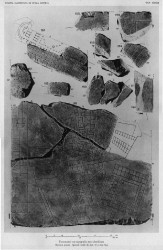
PM 1960 Plates: 3 39
AG 1980 Plates: 40
|
|
| IDENTIFICATION |
| non identified
|
|
| INSCRIPTION |
| None |
|
|
3D Data Not Yet Available |
|
|
| ANALYSIS
|
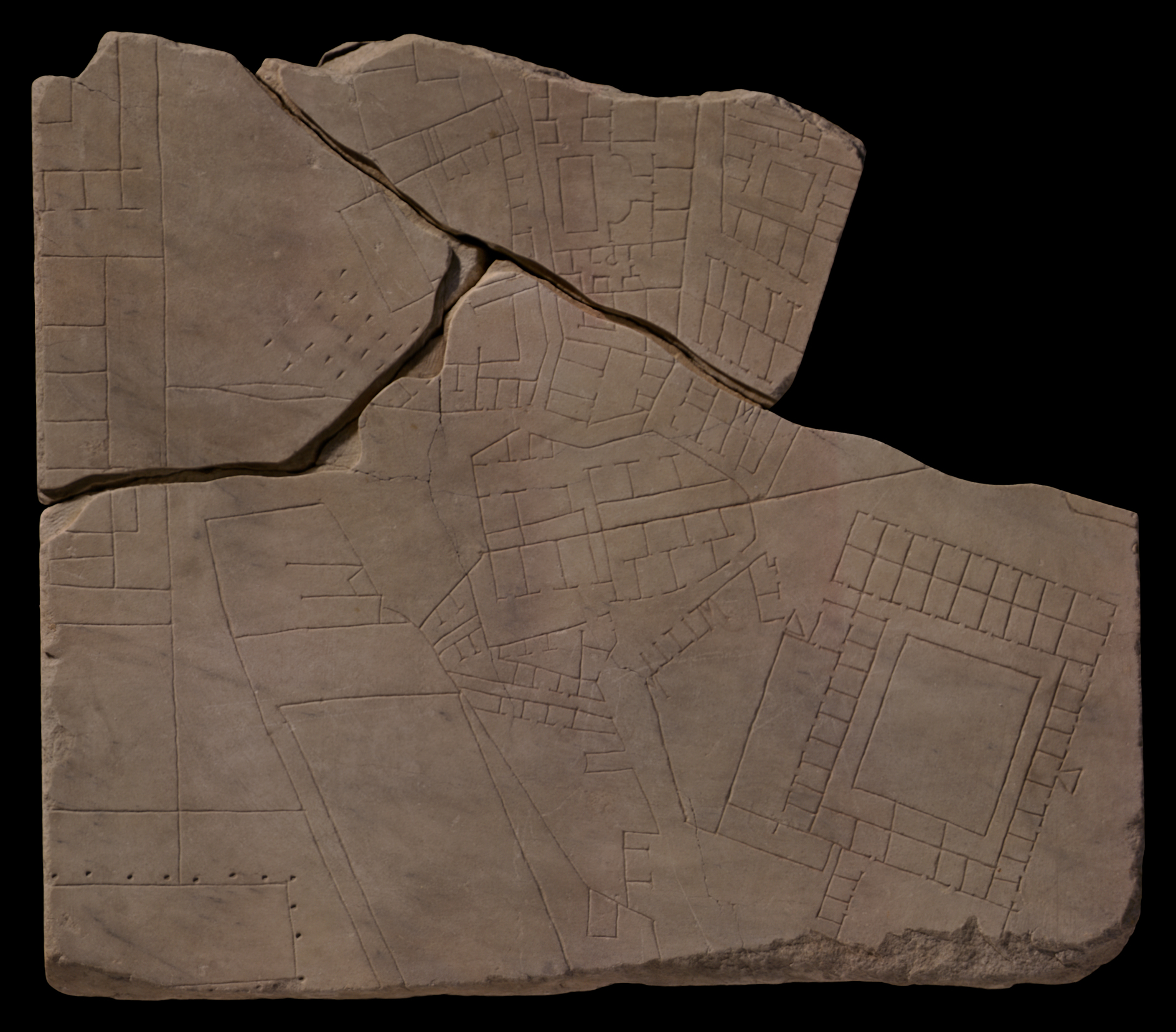
| This fragment group includes a slab edge on either side. Rodriguez-Almeida points out that the width of this slab (89 cm) excludes a horizontal position; it must have stood vertically on the wall. Although we do not have information about the widths of the vertical slabs for large areas of the wall, Rodriguez-Almeida proposes a good candidate: the third slab from the left in the second row of vertical slabs from the top. This slab is the closest in size he has found; the position corresponds to the part of the Quirinal where the Baths of Diocletian were later built (AG 1980, p. 157). |
|
| HISTORY OF FRAGMENT |
| None |
|
 Prev
Prev