ID AND LOCATION
| Stanford #
| 301 |
| AG1980 #
| 301 |
| PM1960 #
| 301 |
| Slab #
| unknown |
| Adjoins
| none |
CONDITION
| Located
| false |
| Incised
| true |
| Surviving
| true |
| Subfragments
| 1 |
| Plaster Parts
| 0 |
| Back Surface
| smooth |
| Slab Edges
| 0 |
| Clamp Holes
| 0 |
| Tassello
| no |
TECHNICAL INFO
|
|
|
|
|
|
|
|
|
|
|
| ANALYSIS
|
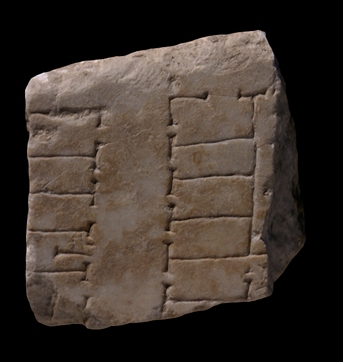
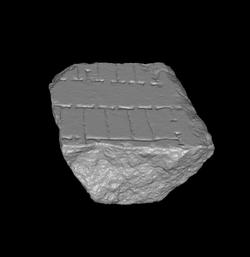
| Description A vertical street separates two vertical rows of rooms. All rooms face the central street. The top and bottom rooms on the right have additional openings in the side and in the back. A guide line is visible in the top opening of the room at the top. The entry to the second room from the bottom on the left is divided by a short wall and two very vague cross walls. Do these represent stairs?
Identification The rooms in this fragment perhaps represent tabernae, although their front openings towards the street are unusually narrow for shop fronts. In general, these are wide to allow for a better display of the goods to be sold. The rooms could represent individual, one-room apartments.
Significance This fragment is typical of non-identified fragments of the Plan. No monumental buildings are represented, and the fragment instead provides a view of the lesser known structures that made up the urban fabric of Rome: the residential and/or commercial buildings.
|
|
| HISTORY OF FRAGMENT |
| This fragment was discovered during excavation of the Forum of Caesar (no date is specified in PM 1960, p. 132). It is currently in storage with the other known FUR fragments in the Museo della Civiltà Romana in EUR under the auspices of the Sovraintendenza ai Beni Culturali del Comune di Roma.
Text by Tina Najbjerg |
|
| KEYWORDS
|
| tabernae, apartments, street |
|
 Prev
Prev