ID AND LOCATION
| Stanford #
| 626 |
| AG1980 #
| 626 |
| PM1960 #
| 626 |
| Slab #
| V-13 |
| Adjoins
| none |
CONDITION
| Located
| false |
| Incised
| true |
| Surviving
| true |
| Subfragments
| 1 |
| Plaster Parts
| 0 |
| Back Surface
| smooth |
| Slab Edges
| 0 |
| Clamp Holes
| 0 |
| Tassello
| no |
TECHNICAL INFO
|
|
|
|
|
|
|
|
|
|
|
| ANALYSIS
|
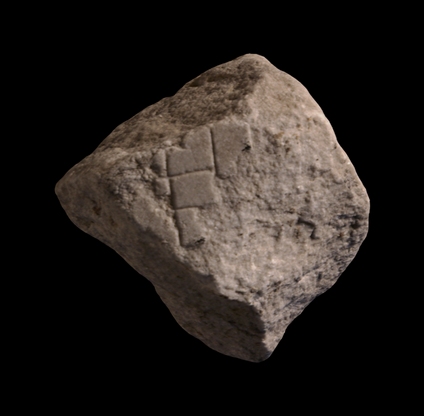
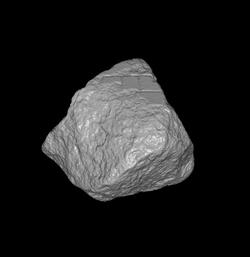
| Description The surface of the fragment is much corroded. It depicts a horizontal row of three or four rooms with additional rooms above and below.
Identification E. Rodríguez-Almeida has proposed that this fragment belongs in slab V-13 which mainly depicts the Tiber. He based this on the thickness of the marble, veining direction, smooth back, and sawing irregularities on the back, characteristics of other fragments located in slab V-13 (AG 1980, pp. 115-118, fig. 30). What the depicted compartments represent is uncertain.
Significance Considering the small size and poor condition of this fragment, it is an impressive feat by Rodríguez-Almeida to have located it in slab V-13. |
|
| HISTORY OF FRAGMENT |
| The provenance of this fragment is unknown (PM 1960, p. 153). Since its publication in PM 160, it has presumably been stored with the other known FUR fragments in the Palazzo Braschi (1955-1998), and since 1998 in the Museo della Civiltà Romana in EUR under the auspices of the Sovraintendenza ai Beni Culturali del Comune di Roma.
Text by Tina Najbjerg |
|
 Prev
Prev