ID AND LOCATION
| Stanford #
| 8a(*) |
| AG1980 #
| 8a |
| PM1960 #
| 8 a |
| Slab #
| VIII-5 |
| Adjoins
| none |
CONDITION
| Located
| true |
| Incised
| true |
| Surviving
| true |
| Subfragments
| 1 |
| Plaster Parts
| 0 |
| Back Surface
| smooth |
| Slab Edges
| 1 |
| Clamp Holes
| 1 |
| Tassello
| no |
TECHNICAL INFO
|
|
|
|
|
|
BIBLIOGRAPHY
- AG 1980, pp. 30, 74-76, fig. 5, pls. 5, 6
- LTUR IV: Septizonium, Septizodium, Septisolium (G.P. Sartorio), pp. 269-272, fig. 123
- PM 1960, pp. 66-67, 213, n. 7, pls. 17, 62
- Reynolds 1996, 46, fig. 1.34
- Richardson 1992, p. 350 (Septizodium)
|
|
|
|
|
| ANALYSIS
|
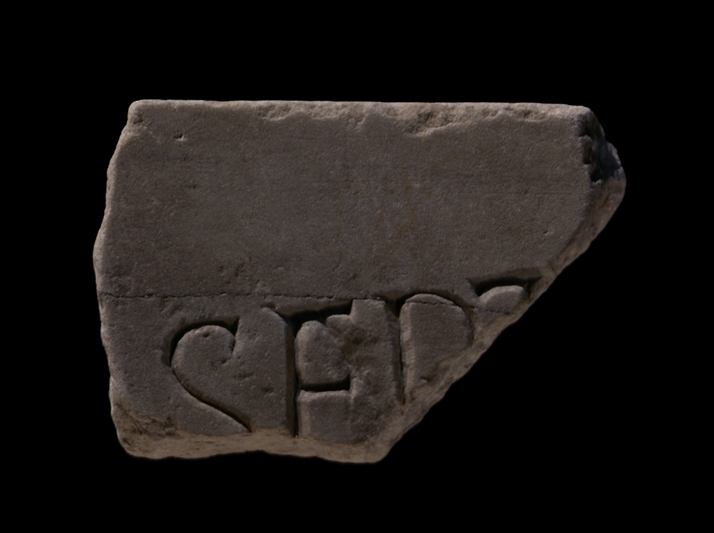
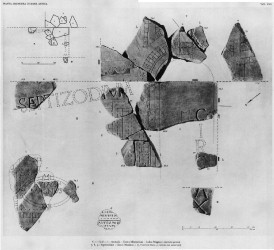
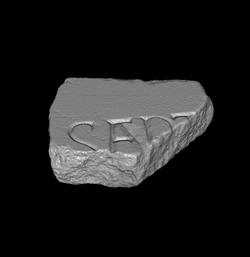
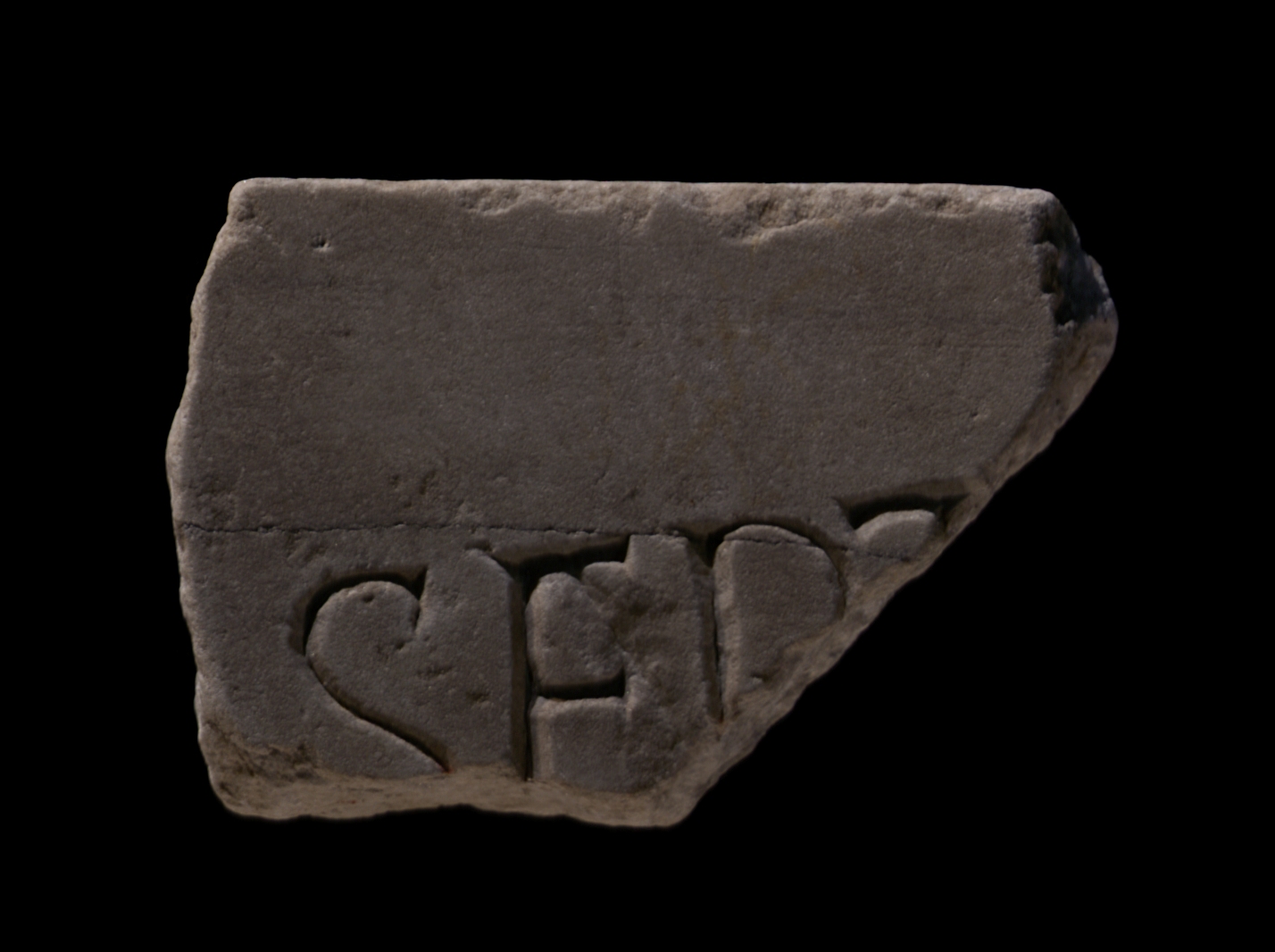
| Description This fragment is part of a slab edge. Almost parallel to the edge of the slab is a very thin veining line that traverses the entire length of the fragment and through the letters. This veining line is also visible in frs. 8c and 8bde, and it has helped place fragments 8i and 8l along the same slab border (AG 1980, p. 76 and pl. 5). The only incisions on this fragment are the top parts of the letters SEPT[---]. The inscription approaches the slab border at a slant.
Identification: Septizodium The inscription in this fragment is continued in fr. 8bde. It labels a monument, the Septizodium, which was built by Septimius Severus in 203 CE (CIL 6.1032) at the SE corner of the Palatine Hill where it faced visitors entering Rome from the Via Appia (LTUR IV, p. 269. See also map in LTUR III, fig. 190). A section of the monument is depicted in fr. 7abcd. Excavations in 1985-88 and Renaissance drawings confirm what these FUR fragments depict: The Septizodium was a tall, elongated monument whose facade resembled a
great nymphaeum and the scenae frons of a Roman theater. Antae framed three semicircular bays and a row of columns, and a pool extended across the front (LTUR IV, p. 270 and fig. 124). On the statue base in the central niche, visible in 7a, perhaps stood a statue of Septimius Severus himself (LTUR IV, p. 269).
Significance Together with fr. 8bde, this fragment represents the only surviving part of an inscription spelling the word SEPTIZODIUM.
The representation of the Septizodium, built in 203 CE (CIL 6.1032)
provides a terminus post quem
for the construction of the Marble Plan, since the urban survey and the carving of the Plan must have occurred with the Septizodium already in place (PM 1960, p. 213).
|
|
| HISTORY OF FRAGMENT |
| Like the majority of FUR fragments, this piece was discovered in 1562 in a garden behind the Church of Saints Cosmas and Damian. From here, it was transferred to the Palazzo Farnese and stored there. It was not among the fragments that were reproduced in the Renaissance drawings that are now kept in the Vatican, but Giovanni Pietro Bellori included it in his 1673 publication. In 1742, it was moved to the Capitoline Museums and exhibited with some of the other known fragments in wooden frames along the main staircase. At that time, it was recognized as part of the Septizodium as opposed to the Saepta Iulia. In 1903, museum curators included the fragment in a reconstruction of the FUR mounted on a wall behind the Palazzo dei Conservatori (1903-1924). Since then, the fragment has been stored with the other known FUR fragments in various places: the storerooms of the Antiquarium Comunale (1924-1939), the Capitoline Museums again (1939-1955), the Palazzo Braschi (1955-1998), and since 1998 in the Museo della Civiltà Romana in EUR under the auspices of the Sovraintendenza ai Beni Culturali del Comune di Roma. (This fragments history corresponds to Iter E as summarized in PM 1960, p. 56.)
Text by Tina Najbjerg and Jennifer Trimble
|
|
| KEYWORDS
|
| septizodium, Septimius Severus, pool, statue base, antae, nymphaeum |
|
 Prev
Prev