Stanford Digital Forma Urbis Romae Project

  • Home
  • Project
  • Map
  • Database
  • Slab Map
  • Glossary
  • Bibliography
  • People
  • Links

  • Page 1167 of 1273
    Prev Next
     ID AND LOCATION
    Stanford # ni261
    AG1980 # none
    PM1960 # none
    Slab # unknown
    Adjoins none

     CONDITION
    Located false
    Incised false
    Surviving true
    Subfragments 1
    Plaster Parts 0
    Back Surface smooth
    Slab Edges 0
    Clamp Holes 0
    Tassello no

     TECHNICAL INFO
    Scanner model15
    Search by:
    where value is:
    NOT
    AND OR
    Search by:
    where value is:
    NOT
     BIBLIOGRAPHY

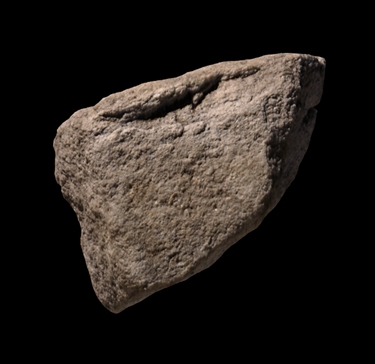
    Photograph (47 KB)
    Note about photographs

    PM 1960 Plates: None
    AG 1980 Plates: None
     
    IDENTIFICATION
    Not incised. Not FUR?
    INSCRIPTION
    None

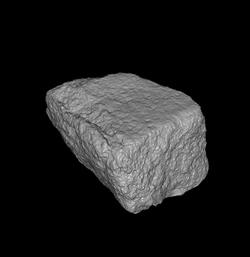
    3D Model Full model
    Download the viewer | Note about 3D models
    ANALYSIS
    Description Both the front and the back surface on this fragment are rough, but there are no other distinguishing features.

    Identification There were many blank areas on the Marble Plan, including the spaces occupied by the Tiber River (see fragment 24d), by gardens, arenas, temple precincts and courtyards--in short, any space devoid of architecture or human construction. In addition, several rows of large marble slabs occupied the entire lower part of the wall of the aula on which the Plan was installed, and perhaps other walls as well. Blank fragments like this one could have originated from any of these areas. However, there are no similarities between this piece and other FUR fragments, and it is doubtful that it belonged to the Marble Plan.

    HISTORY OF FRAGMENT
    Blank fragments were not kept during the early centuries of the Marble Plan's rediscovery. Surviving pieces like this one probably come from excavations done since 1867 (PM 1960, p. 163).

    Text by Tina Najbjerg and Jennifer Trimble.


    Stanford Graphics | Stanford Classics | Sovraintendenza ai Beni Culturali del Comune di Roma

    Copyright © The Stanford Digital Forma Urbis Romae Project